
Audit Google Drive content and access
This feature lets you generate a complete report of any Google Drive folder, including all files, subfolders, and their sharing settings. In just a few clicks, you can see exactly what content exists inside a folder and who has access to it, exported into a clear Google Sheets report.
Use cases
- See all files inside a folder or Shared Drive
- Check who has access to each file
- Detect public or external sharing
- Review content shared with you
Google Workspace administrators can also leverage Folgo admin feature to perform domain wide audits. Learn more.
In this article
Get started
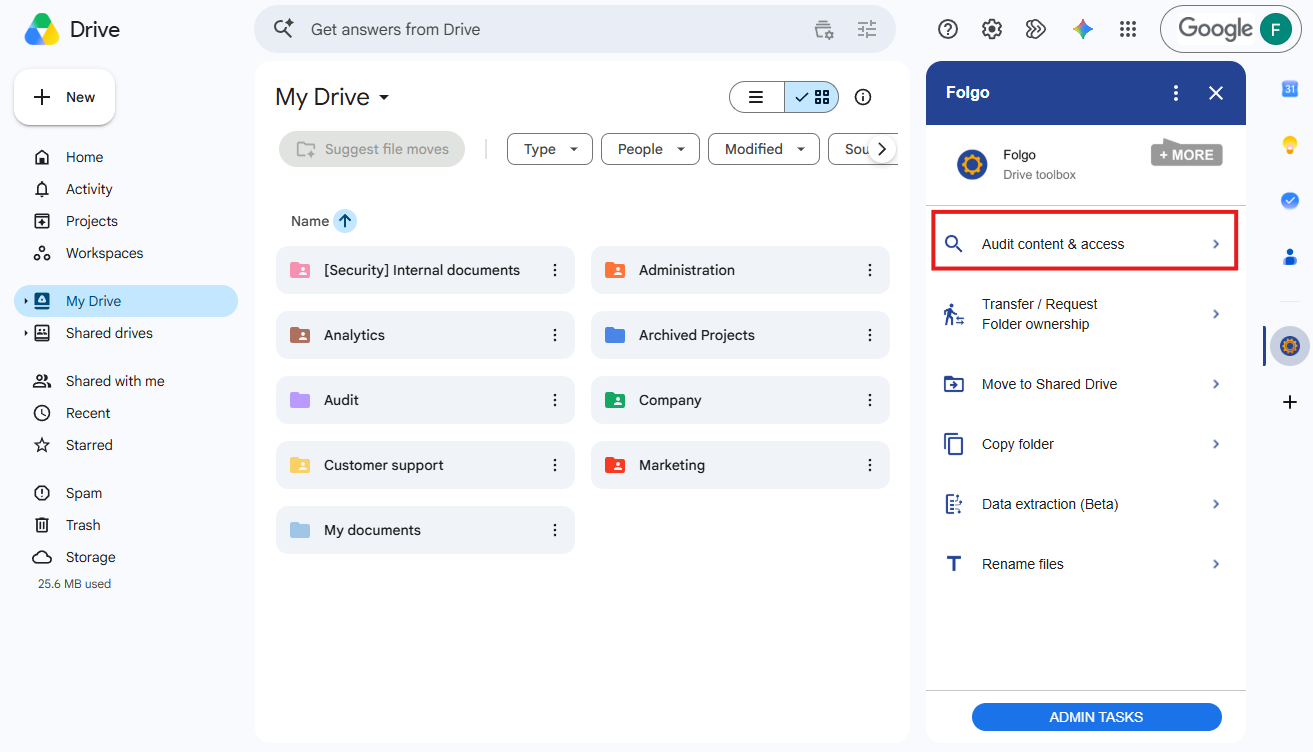
1. Once installed, click on the Folgo icon in your Google Drive side panel:

2. In the Folgo menu, select the feature "Audit content & access":
Choose what you want to audit
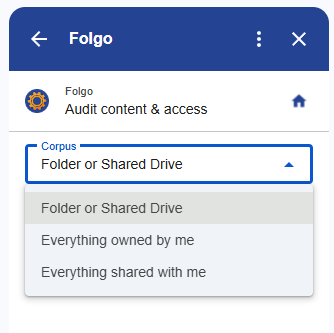
After clicking Audit content & access, choose the scope of your audit. Folgo offers three audit paths depending on what you want to review:
- Folder or Shared Drive
- Everything owned by me
- Everything shared with me
Option 1: Audit a folder or Shared Drive
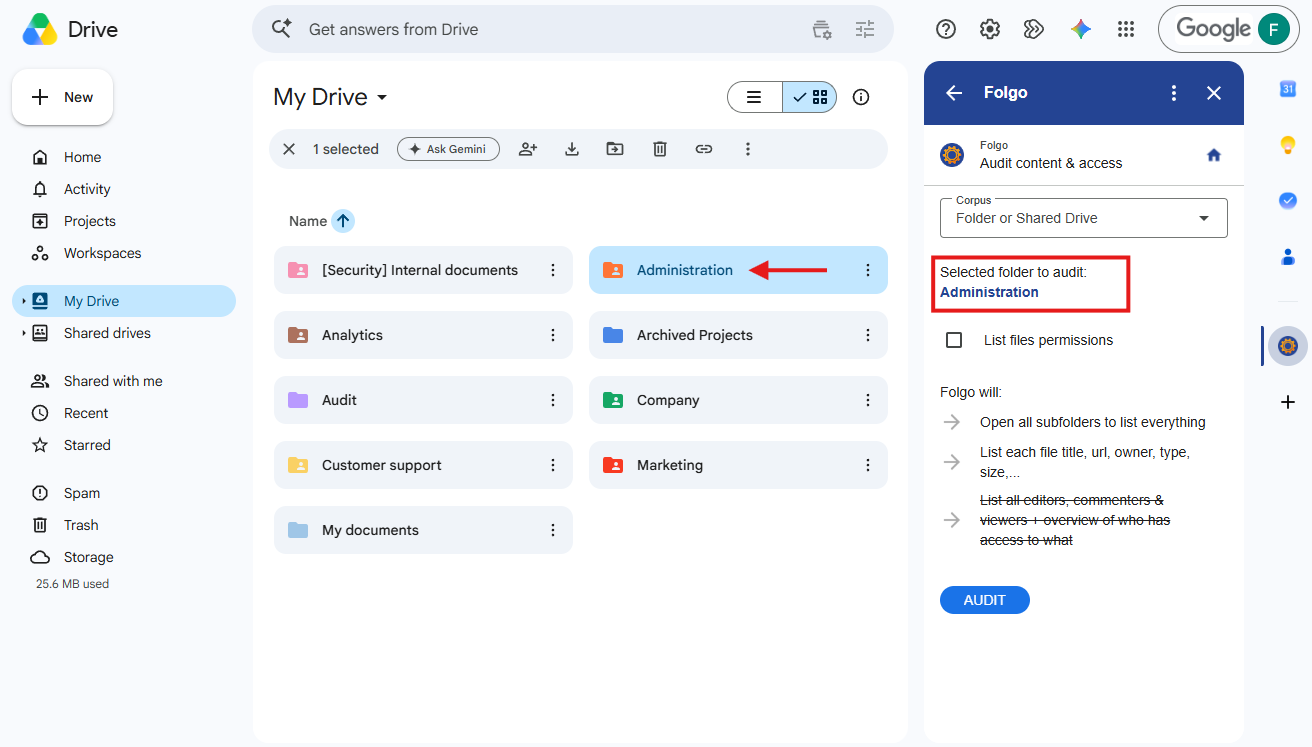
Select this corpus if you want to audit a specific folder, subfolder, or Shared Drive. This is useful when you want to review permissions, sharing settings, or content inside a specific location.
Choose "Folder or Shared Drive", then click the folder or Shared Drive directly in Google Drive. Folgo will detect your selection automatically.
Note for Shared Drives:
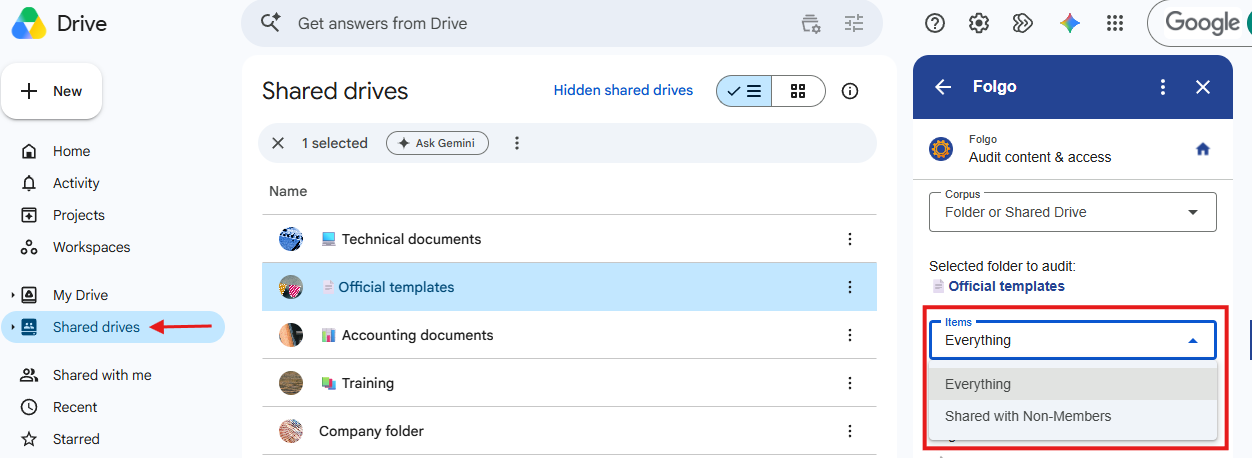
If you select content from a Shared Drive, Folgo may offer additional item filters:
- Everything: audits all selected Shared Drive content.
- Shared with non-members: audits only items shared with people who are not members of the Shared Drive. This is useful to quickly identify files or folders that have been shared outside the Shared Drive membership, so you can review unexpected or risky access.
Option 2: Audit content owned by you
Select this corpus if you want to audit content from your own Drive.
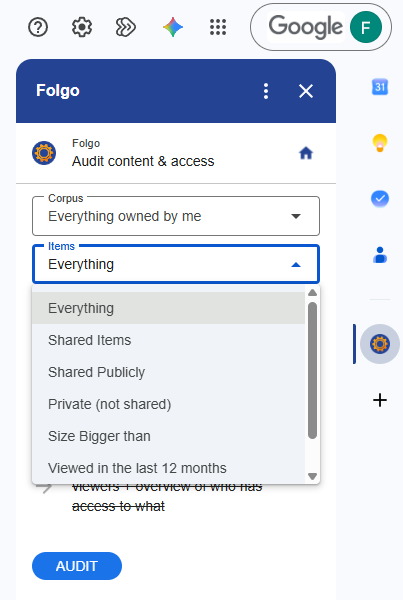
Choose "Everything owned by me", then choose the item you want to include:
- Everything: list all content you own in Google Drive.
- Shared items: list only items you own and have shared with others.
- Shared publicly: list files and folders available to anyone or anyone with the link.
- Private: list items that are not shared.
- Size bigger than...: list items larger than the size you specify, in GB.
- Viewed in the last 12 months: list content that has been accessed within the past year.
This is useful when you want to clean up your own Drive, review public files, find large files, or check what you have shared.
Option 3: Audit content shared with you
Select this corpus if you want to audit files and folders that other people have shared with you.
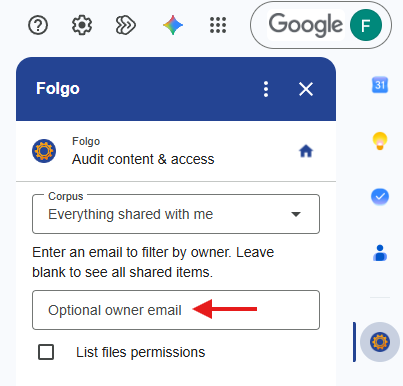
Choose "Everything shared with me", then enter the owner’s email address if you want to filter the audit by a specific file owner.
This is useful when you want to review external content you can access, identify files shared by a specific person, or better understand what has been shared with your account.
Start the audit
Once your scope and options are selected, click Audit. Folgo will generate a spreadsheet report with the results.
Tip: you can enable List file permissions. This adds detailed access information to the audit report, including who has access to each file or folder and their permission level.

Review the audit report
Once the audit starts, Folgo will analyze the selected content and generate a Google Sheets report. You can click “Refresh” to check the progress, but you don’t need to keep Folgo or your computer open. The audit runs in the background, and you’ll receive an email with a summary and a link to the report when it’s complete.

The report contains:
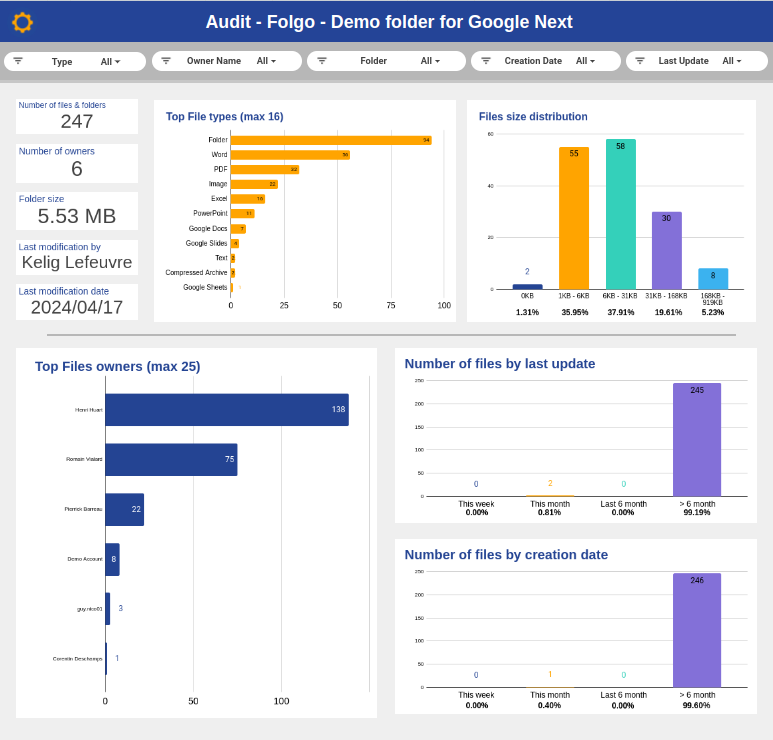
- An Audit Dashboard : to get a quick overview of your results, the size, the top files owner, top files type with several diagrams to represent the data in your folder.
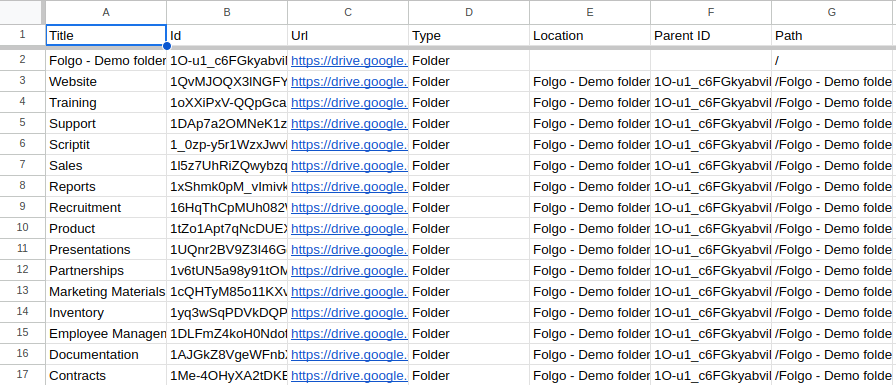
- A Listing Detail : a complete listing of every files and folders, contained in in every sub-levels of the Shared drive, or Folder or Account you audited. You get informations about the files location, permissions if you selected this options, size, last time it's been accessed and on and on.
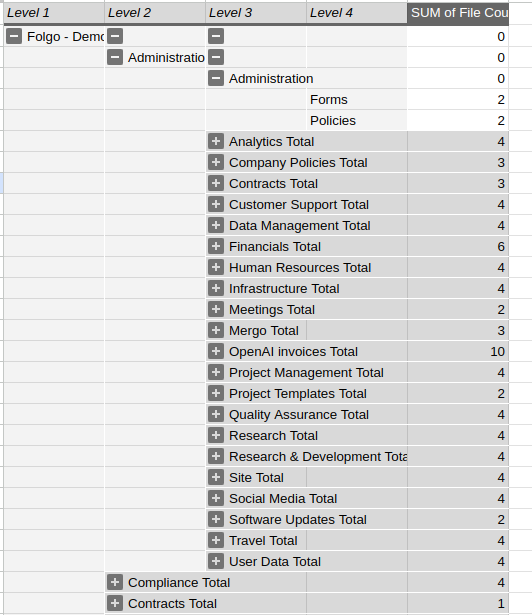
- A Tree View to vizualize how you data is organized.
Audit who has access to each file and folder
In the audit report, if you have selected the 'List files permissions' option, you will get a comprehensive view of who has access to which content.
Permission Recap
This tab gives you an overview of who has access to the audited content. It lists the users, groups, and domains that can access at least one file or folder. It also shows how many items they can access, and indicates their permission level, such as Owner, Editor, Commenter, or Viewer.
Tip: Use the filter options in Google Sheets to focus on specific results. For example, you can filter by domain to focus on a specific company andd check who has access to your content. It helps you quickly spot external sharing.

Access Lookup
Use this tab to see exactly which files or folders a specific user can access. Select an entry to view the full list of accessible content and permission levels.

Conclusion
Folgo’s Audit feature gives you a clear report of your Google Drive content and sharing settings. It helps you see what exists, who has access, and what needs review before taking action.
This visibility is essential for security reviews, governance, or preparing for changes like transfers or permission cleanups. In simple terms, it helps reducing oversharing and strengthen data protection.
Auditing is an essential process that often requires subsequent actions based on the audit results. Folgo provides the capability to revoke unwanted accesses and remove permissions.
Running an audit before moving a folder to a Shared Drive helps you identify sharing or permission issues that could affect the migration. Learn more about why this step matters here.